What the 12 Days of Christmas Actually Mean
The 12 days of Christmas start on December 25th, not before it. The song began as a 1780 memory game, and the famous secret-code story only goes back to 1979.
The twelve days of Christmas start on Christmas Day. Not twelve days before it, which is how most store promotions and office countdowns use the phrase, but on December 25th itself, running through January 5th. The season the song describes is the one most people spend taking the tree down.
Get that right and the rest of the song starts to make sense. It's older than a lot of carols people assume are ancient, it was never a secret code, and for most of its life it wasn't really sung at all. It was played, and somebody lost every time.
Twelve days that start when everyone else stops
In the Western church calendar, Christmas isn't a day. It's a season. Day one is December 25th and day twelve is January 5th, and the evening of the 5th is Twelfth Night: the old last-blast party before Epiphany on January 6th, the feast marking the Magi's arrival. Shakespeare's Twelfth Night takes its name from it. Some traditions count from the 26th to the 6th instead. Either way, the whole thing happens after the presents are open.
Which puts New Year's Eve on the seventh day of Christmas, the one with the swans a-swimming. If you're running a quiz on the 31st, our New Year's trivia questions are the obvious pick, but by the song's reckoning you're only just past halfway.
It started as a memory game with penalties
The earliest printed version appears in Mirth Without Mischief, a children's book published in London around 1780. It isn't presented as a carol. Players took turns with the verses, each one adding the new day and then reciting every gift before it in order, and anyone who slipped paid a forfeit. Iona and Peter Opie, the folklorists who catalogued British nursery rhymes, filed it as a memory-and-forfeits game for exactly that reason.
Read it with that in mind and the shape stops looking padded. The cumulative structure is the whole point. It's the trap. By the twelfth verse you're reciting twelve lines in strict reverse order, at speed, with people watching, and whoever drops the maids a-milking owes the room.
Nobody was calling those birds
In the 1780 text, day four brings four colly birds. Colly is an old regional word for coal-black, so these were blackbirds, a perfectly sensible gift in a song where most of the first week is poultry.
Calling birds turned up in 1909, when the English composer and baritone Frederic Austin published the arrangement almost everyone sings now. Austin fixed the tune, swapped the colly birds out, and gave five gold rings that slow, swelling flourish that makes an entire room drag the line out together. Before him the words wandered between several melodies. After him there was one.
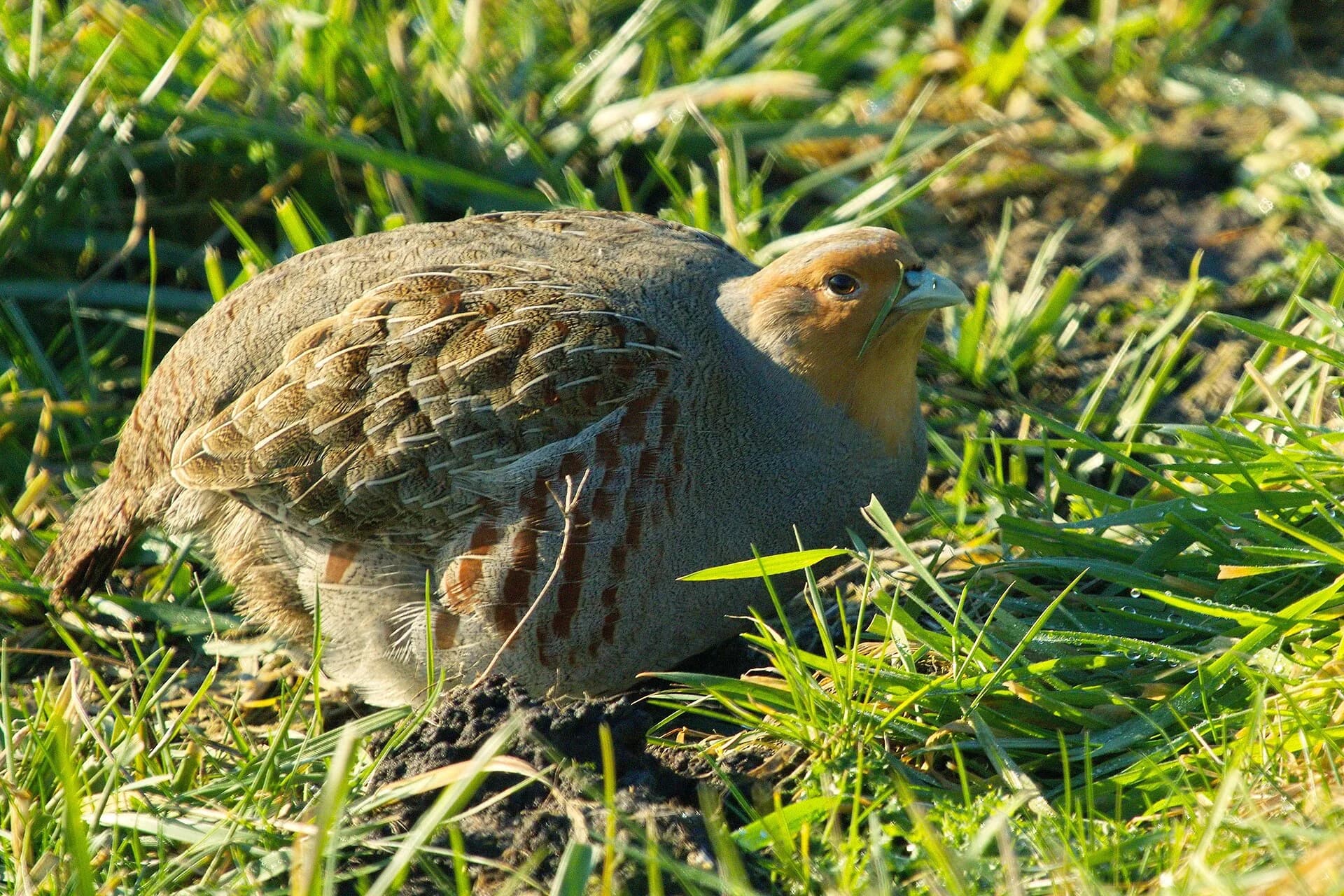
The partridge is stranger still. The grey partridge, England's native species, lives on the ground: it nests there, feeds there and roosts there in huddled coveys. Putting one in a pear tree is a bit like putting a trout in a hedge. One popular theory says the line is a garbled half-translation of perdrix, French for partridge; another says the five gold rings were really ring-necked pheasants, which would make the first seven gifts all birds. Nobody has produced a source for either. They're pleasing guesses, not evidence.
The secret catechism story falls apart on contact
Look up the song's meaning and you'll quickly meet the claim that it was a coded catechism, written so Catholic children in England could learn their faith quietly in the years when Catholic worship was penalised, from 1558 until the Catholic Emancipation Act of 1829. The two turtle doves are the Old and New Testaments, the ten lords a-leaping are the Ten Commandments, and so on down the list.
The paper trail is the first problem. The earliest known version of the theory is a 1979 article by the Canadian hymnologist Hugh D. McKellar, and it spread widely once it reached the internet in the 1990s. Nobody has found it in anything from the two centuries before that.
The code itself is the bigger one. The Ten Commandments, the four Gospels and the twelve apostles were not in dispute between Catholics and the Church of England. Anglicans believed in every one of them. A secret code for things you were allowed to say out loud is an odd thing to risk prison over. It's a good story, and it's almost certainly made up.
Add it up and your true love has a storage problem
Count every gift across all twelve verses, with the partridge arriving twelve times and the turtle doves eleven times in pairs, and the total is 364. That's one gift for every day of the year, short by one. It's also a classic quiz question, and it turns up in our Christmas trivia questions because almost nobody gets it right first time.
The breakdown is funnier than the total. Geese and swans tie as the most numerous gift at 42 apiece, since six geese arrive on seven separate days and seven swans on six. Leave the gold rings out of it and the song delivers 184 birds. By January 5th you aren't in a relationship, you're running a smallholding.
PNC Bank has priced the whole list every year since 1984 in its Christmas Price Index. The 2025 edition put one set of the twelve gifts at $51,476.12 and all 364 at $218,542.98. The gold rings jumped 32.5% in a single year on the back of gold prices; PNC put most of the rest down to a tight labor market. There are more numbers like that in the holiday trivia questions we put together, if you need a round for the office party.
Play it the way it was written
The people hunting for hidden meaning keep skipping the obvious one. The song tells you exactly what it's for every time it starts another verse. It was built to get longer until someone fumbles, and it's been doing that job for close to 250 years.
It still works. Go round the table one verse each, and instead of the old forfeit, anyone who drops a gift has to answer a question from our Christmas song trivia. Start on Christmas Day if you want to do it properly. You'll finish on January 5th, which is roughly when the neighbors' trees start appearing on the curb.