20 Fantastic Flower Trivia Questions and Answers
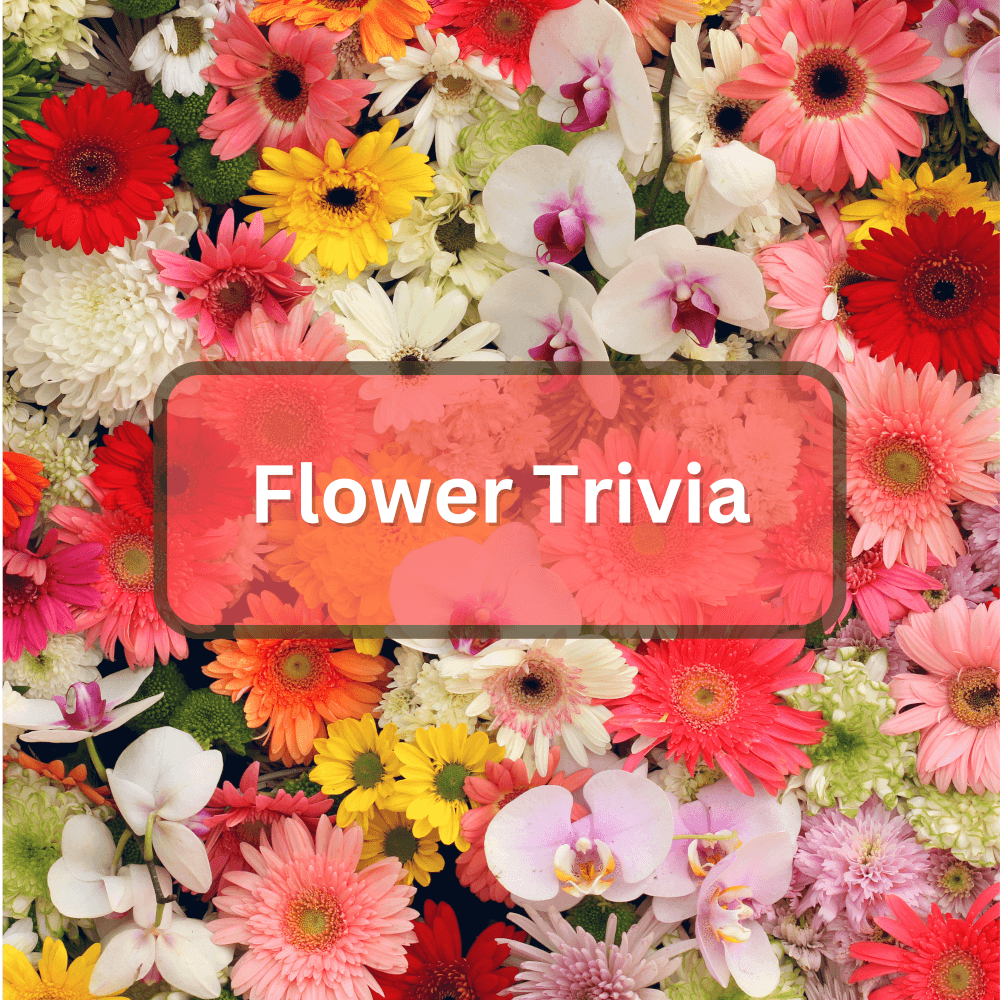
Blossom into knowledge with Flower Trivia! From the meanings behind different blooms and famous gardens around the world to rare species and botanical wonders, these questions will test how well you know the world of flowers. Perfect for gardeners, nature lovers, and trivia fans alike, this quiz celebrates the beauty, science, and symbolism of flowers.
1What species produces the world’s largest single flower by diameter?
2What is considered the smallest flowering plant on Earth?
3Which spice is harvested from the stigmas of a flower and is famed as the most expensive spice?
4Which commercially important flavoring comes from an orchid that usually requires hand pollination outside its native range?
5What soil factor most directly drives the famous blue-to-pink color shift in many bigleaf hydrangeas?
6A sunflower “flower” is actually what kind of structure made of many small flowers?
7Which woodland wildflower can heat its inflorescence well above air temperature—sometimes enough to melt snow?
8Which night-blooming cactus is famed for flowers that open for a single night each year?
9Which Andean bromeliad bears one of the tallest flower spikes on Earth?
10Two very different plants are both nicknamed “corpse flower.” Which are they?
11Which flowering plant seed has been germinated after roughly 1,300 years of dormancy?
12What famous 17th-century economic bubble centered on a flower?
13What record does the Lady Banks’ rose in Tombstone, Arizona, hold?
14Which dogwood holds the record for the fastest flower opening—under half a millisecond?
15Young sunflowers track the sun across the sky each day. What biological timing mechanism underlies this?
16Which orchid famously inspired Darwin to predict a moth with an extraordinarily long tongue—and which insect proved him right?
17True or false: Plants that make betalain pigments also make anthocyanins in their flowers.
18Has a “true” blue rose been created by breeding, or was genetic engineering required?
Answer Key
- 1. Rafflesia arnoldii
- 2. Wolffia (watermeal)
- 3. Saffron (from Crocus sativus)
- 4. Vanilla (Vanilla planifolia)
- 5. Aluminum availability (influenced by soil pH)
- 6. A capitulum (head) of many florets (Asteraceae)
- 7. Eastern skunk cabbage (Symplocarpus foetidus)
- 8. “Queen of the night” (e.g., Selenicereus grandiflorus)
- 9. Puya raimondii (“Queen of the Andes”)
- 10. Rafflesia arnoldii and Amorphophallus titanum
- 11. Sacred lotus (Nelumbo nucifera)
- 12. Tulip mania (1636–1637, Netherlands)
- 13. World’s largest rose bush
- 14. Bunchberry dogwood (Cornus canadensis)
- 15. A circadian clock guiding heliotropism
- 16. Angraecum sesquipedale; the hawkmoth Xanthopan (morganii) praedicta
- 17. False—betalains and anthocyanins are mutually exclusive in most Caryophyllales
- 18. Genetic engineering (Suntory’s “Applause” rose with delphinidin)