State Capitals: The Full List, and the Cities That Almost Got the Job
Every US state capital from Alabama to Wyoming, with the year each city took the job, plus the stories behind the list: a capital founded in 1610, California's five moves, Oklahoma's disputed seal and the capitals everyone forgets.
Fifty states, fifty capitals, and only 17 of them are the biggest city in their state. That one fact explains most of the trouble people have with this list. Nobody forgets Boston or Phoenix. Everybody forgets Pierre.
The full A-to-Z list, with the year each city took the job, is further down. First, the stories that make the list stick.
Santa Fe was a capital before there was a United States
New Mexico's capital is older than the country by a comfortable margin. A 2007 memorial passed by the New Mexico Legislature records that by the summer of 1610 Governor Pedro de Peralta had established the city of Santa Fe, and calls it the oldest capital city in the United States.
For scale, that's ten years before the Mayflower reached Cape Cod. Boston, the next-oldest date on the list, didn't become a capital until 1630.
California's floating capital
California took five tries to settle down. San Jose was the first capital after statehood in 1850, then the legislature moved to Vallejo in 1851, Sacramento in 1852, Benicia in 1853 and Sacramento again in 1854, where it finally stayed. The California State Capitol Museum lists the whole itinerary.
Sacramento, the sixth-largest city in the state, won. Our California trivia questions have more on the Golden State's habit of doing things its own way.
Oklahoma moved its capital by popular vote
Oklahoma is the last state to change its capital, and it did it with a ballot. Guthrie served as the state capital from 1907 to 1910, according to the Oklahoma Historical Society. On June 11, 1910, voters chose Oklahoma City instead.
Governor Charles Haskell didn't wait around. He moved the state seal to Oklahoma City, which caused a fight because Guthrie still claimed to be the capital. The Historical Society's story of the Capitol tells the rest.
Twenty-five states have moved their capital at least once, ten of them among the original thirteen. Oklahoma closed the list.
Two state capitols that look down on Washington
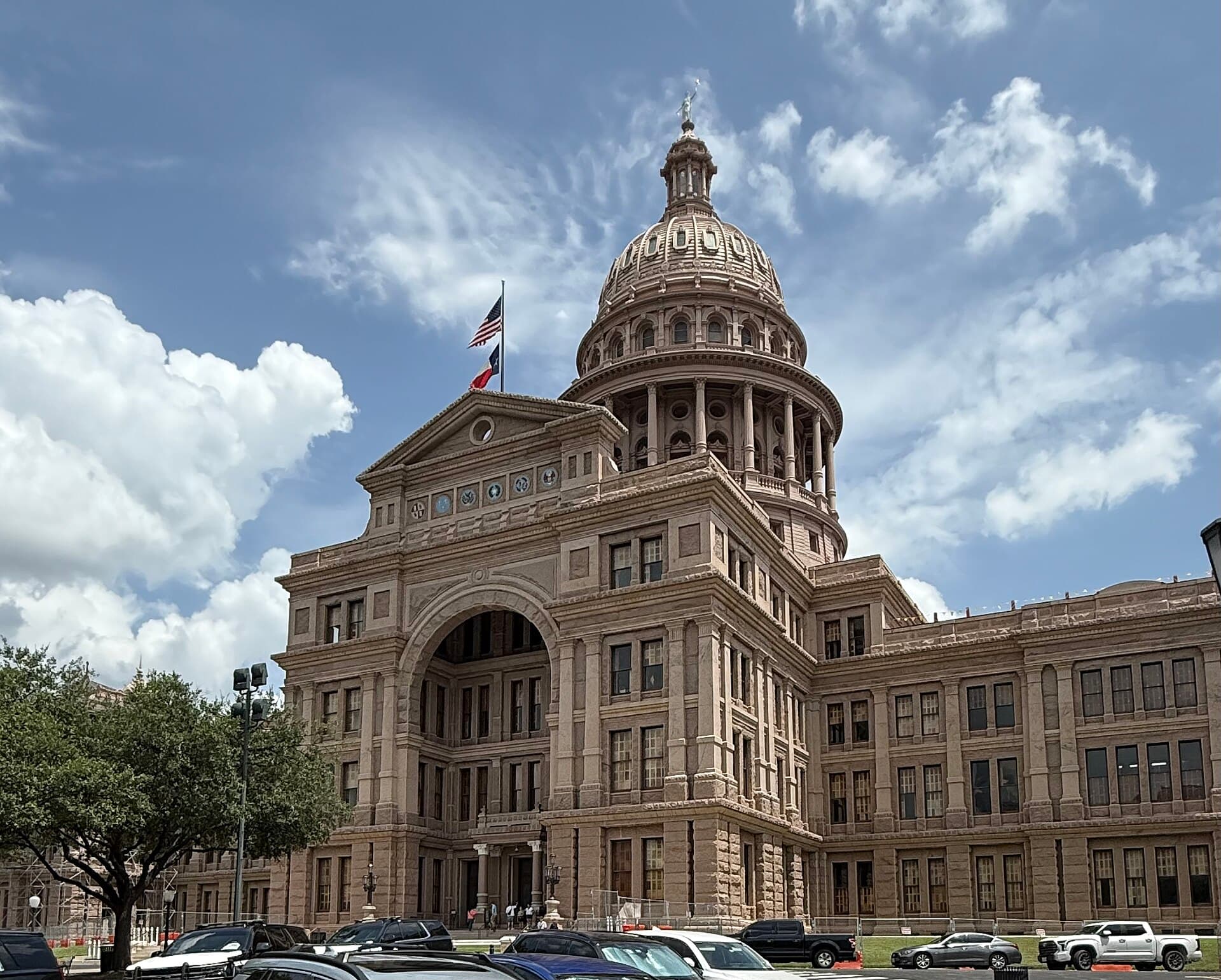
Texas likes to say its Capitol is taller than the one in Washington, and for once the boast checks out. The State Preservation Board puts the Texas Capitol at 302.64 feet to the tip of the star on the Goddess of Liberty, against 288 feet for the US Capitol. That's 14.64 feet of bragging rights.
Louisiana went further. Its Capitol in Baton Rouge stands 450 feet tall, 34 floors, and the Louisiana House calls it the tallest capitol in the United States. It was the project of Governor Huey P. Long, who was shot inside the building on September 8, 1935 and died two days later.
The small ones are the hard ones
Montpelier, Vermont, had 8,074 residents in the 2020 census, which makes it the smallest state capital in the country. Pierre, South Dakota, comes next at 14,091, and Augusta, Maine, third at 18,899. Phoenix, the largest, has more than 1.6 million.
That's the pattern behind most wrong answers. A lot of states put the government somewhere central or neutral and let the big city get on with business. The capitals that trip people up most:
- Olympia, Washington: the 23rd-largest city in its state, nowhere near Seattle's size
- Frankfort, Kentucky, and Jefferson City, Missouri: each only the 15th-largest city in its state
- Albany, New York: about 99,000 people, in a state with New York City
- Springfield, Illinois: seventh in a state built around Chicago
- Harrisburg, Pennsylvania: smaller than Philadelphia, Pittsburgh and six other cities in the state
- Tallahassee, Florida: eighth, behind Jacksonville, Miami and Tampa
Every state capital, A to Z
Years show when each city started serving as the capital, counting the colony or territory that came before the state where there was one. Population figures above are from the 2020 census.
- Alabama: Montgomery, capital since 1846
- Alaska: Juneau, capital since 1906
- Arizona: Phoenix, capital since 1889, the largest state capital by population
- Arkansas: Little Rock, capital since 1821
- California: Sacramento, capital since 1854, after San Jose, Vallejo and Benicia
- Colorado: Denver, capital since 1867
- Connecticut: Hartford, capital since 1875
- Delaware: Dover, capital since 1777
- Florida: Tallahassee, capital since 1824
- Georgia: Atlanta, capital since 1868
- Hawaii: Honolulu, capital since 1845
- Idaho: Boise, capital since 1865
- Illinois: Springfield, capital since 1837
- Indiana: Indianapolis, capital since 1825
- Iowa: Des Moines, capital since 1857
- Kansas: Topeka, capital since 1856
- Kentucky: Frankfort, capital since 1792
- Louisiana: Baton Rouge, capital since 1880, home to the tallest state capitol in the country
- Maine: Augusta, capital since 1832
- Maryland: Annapolis, capital since 1694
- Massachusetts: Boston, capital since 1630, the second-oldest date on this list
- Michigan: Lansing, capital since 1847
- Minnesota: Saint Paul, capital since 1849
- Mississippi: Jackson, capital since 1864
- Missouri: Jefferson City, capital since 1826
- Montana: Helena, capital since 1875
- Nebraska: Lincoln, capital since 1867
- Nevada: Carson City, capital since 1861
- New Hampshire: Concord, capital since 1808
- New Jersey: Trenton, capital since 1784
- New Mexico: Santa Fe, capital since 1610, older than the country
- New York: Albany, capital since 1797
- North Carolina: Raleigh, capital since 1792
- North Dakota: Bismarck, capital since 1883
- Ohio: Columbus, capital since 1816
- Oklahoma: Oklahoma City, capital since 1910, the last state to move its capital
- Oregon: Salem, capital since 1855
- Pennsylvania: Harrisburg, capital since 1812
- Rhode Island: Providence, capital since 1900
- South Carolina: Columbia, capital since 1786
- South Dakota: Pierre, capital since 1889
- Tennessee: Nashville, capital since 1826, after stints in Knoxville, Kingston and Murfreesboro
- Texas: Austin, capital since 1836, home to a Capitol taller than the one in Washington
- Utah: Salt Lake City, capital since 1858
- Vermont: Montpelier, capital since 1805, the smallest state capital by population
- Virginia: Richmond, capital since 1780
- Washington: Olympia, capital since 1853, and only the 23rd-largest city in its own state
- West Virginia: Charleston, capital since 1885
- Wisconsin: Madison, capital since 1838
- Wyoming: Cheyenne, capital since 1869
Put it to the test
Reading a list is one thing; naming Pierre under pressure is another. Try our state capital trivia questions, then our state trivia questions for the rest of the map. If you'd rather learn the states by their quirks, start with the stories behind state nicknames or the 50 state birds.
One last trick that works: remember the exceptions, not the rule. The 17 states whose capital is also their biggest city are easy. Learn the other 33 by their story, like Guthrie losing the seal or California's five moves, and the names stop sliding away. Then try our geography trivia questions.