25 Delightful Baking Trivia Questions and Answers
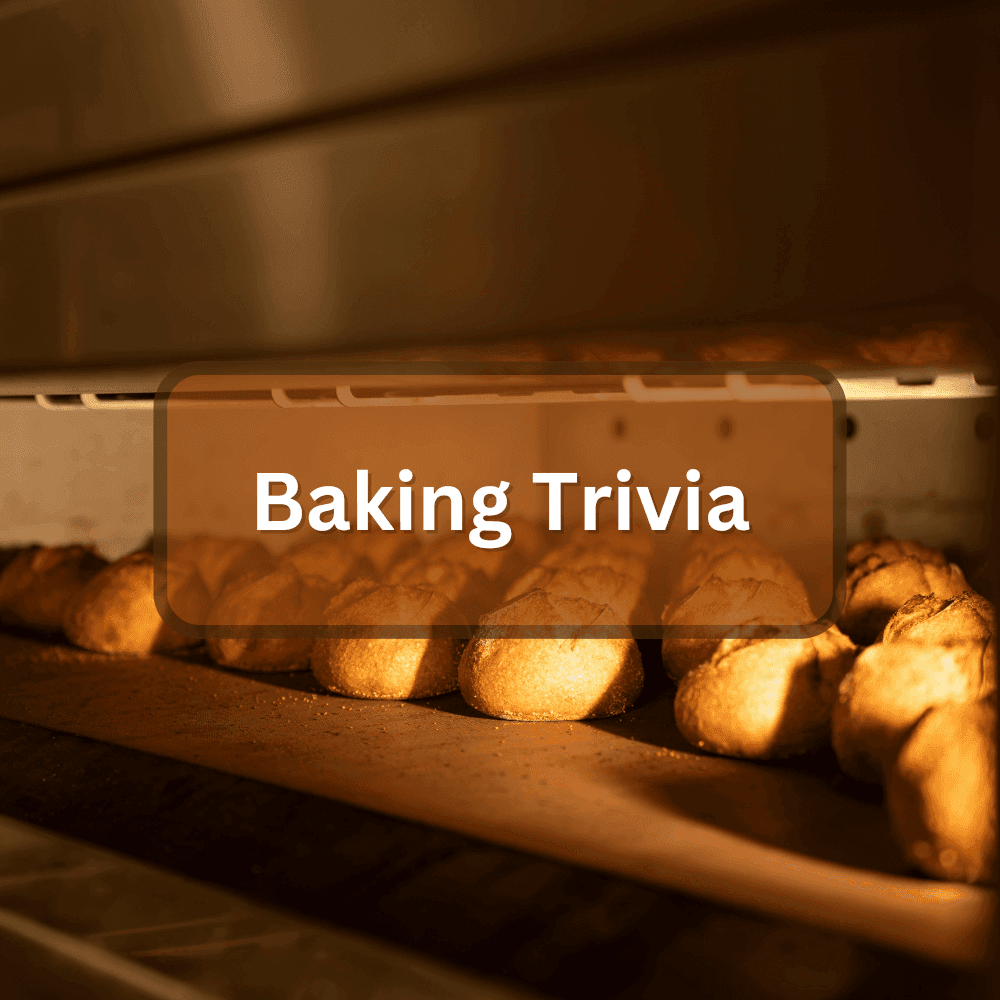
Whisk up some fun with Baking Trivia! From the science of perfect pastries and iconic desserts to famous bakers and baking traditions around the world, these questions will test how much you know about the art of baking. Perfect for home bakers, foodies, or anyone who loves a sweet challenge, this trivia celebrates the creativity and craft behind every delicious bite.
1Which ancient civilization is credited with developing enclosed ovens made out of baked Nile clay for baking bread?
2What is the age of the oldest known oven discovered in Croatia, used for baking flatbreads and meats?
3Which type of leavened bread technique traces its origin back to around 1500 BC or earlier?
4What “library” exists to preserve sourdough cultures from around the world?
5In what year did Portuguese bakers bake a continuous loaf of bread nearly 3,975 ft long, setting a world record?
6Which type of cake is a regional specialty from St. Louis, featuring a dense, gooey texture and a top layer of cream cheese in many modern versions?
7Which style of cake first appeared as compact discs of grain (not leavened) rather than raised sweet cakes?
8Which baking equipment style was widely used in old times, dome-shaped Oven, often requiring long heating times?
9Which country’s longstanding bakery is known for blending sourdough techniques with French baking styles as early as 1849?
10Which classic dessert filling is known by the French term “crème pâtissière”?
11Which cookie type is traditionally rolled in cinnamon sugar before baking?
12What is the principal component that gives meringue its light airy structure?
13Which baking “mistake” product is said to have been created by accident and became a cookie staple?
14What is a cake baked with minimal or no milk, butter, or eggs, common during economic hardship?
15What simple step before rolling pie dough keeps crusts from shrinking by relaxing gluten and keeping fat cold?
16Which airy oil-based cake became widely known after General Mills and Betty Crocker shared the recipe with home bakers in 1948?
17What pastry rises purely from steam generated in a pre-gelatinized dough?
18What browning process, distinct from caramelization, builds much of bread crust’s flavor?
19What technique of pre-baking a pie shell helps prevent a soggy bottom with wet fillings?
20What type of cocoa is alkalized to raise pH, darken color, and change how it reacts with leaveners?
21In baker’s percentage, which ingredient is always 100 percent?
22Which French bread-science technique from the 1970s improves dough extensibility by resting flour and water before adding salt and yeast?
23Why does traditional sourdough bread often stale more slowly than yeasted sandwich bread?
24What common seasoning strengthens gluten and moderates yeast activity in bread dough?
25In laminated pastries such as croissants what creates lift between the many layers of dough and butter?
Answer Key
- 1. The Egyptians.
- 2. About 6,500 years old.
- 3. Sourdough.
- 4. The Puratos Sourdough Library in Saint-Vith, Belgium.
- 5. 2005.
- 6. Gooey butter cake.
- 7. The earliest cakes (grain discs).
- 8. Beehive ovens.
- 9. The United States (San Francisco’s Boudin Bakery).
- 10. Pastry cream (custard filling for éclairs, tarts, etc).
- 11. Snickerdoodle.
- 12. Egg whites (whipped with sugar).
- 13. Chocolate chip cookie.
- 14. Depression cake (also called “War Cake” or “Poor Man’s Cake”).
- 15. Chill and rest the pastry.
- 16. Chiffon cake.
- 17. Pâte à choux.
- 18. The Maillard reaction.
- 19. Blind baking.
- 20. Dutch-process cocoa.
- 21. Flour.
- 22. Autolyse.
- 23. Its acidity slows starch retrogradation.
- 24. Salt.
- 25. Steam from the butter’s water content.